
This guide walks you through what a typical cafe costs to open in Australia, where the money actually goes, and where most first-time owners run into trouble.
A small suburban cafe (40 to 60 seats, lean fitout, modest equipment) can be opened for $150,000 to $250,000 if you’re disciplined. A standard cafe with a proper fitout and full kitchen runs $250,000 to $450,000. A premium fit-out cafe in a high-rent CBD or premium suburb routinely lands $400,000 to $700,000+.
That’s the all-in figure. It includes the fitout, the equipment, the licences, the marketing, and the working capital you need to keep the doors open while the regulars find you.
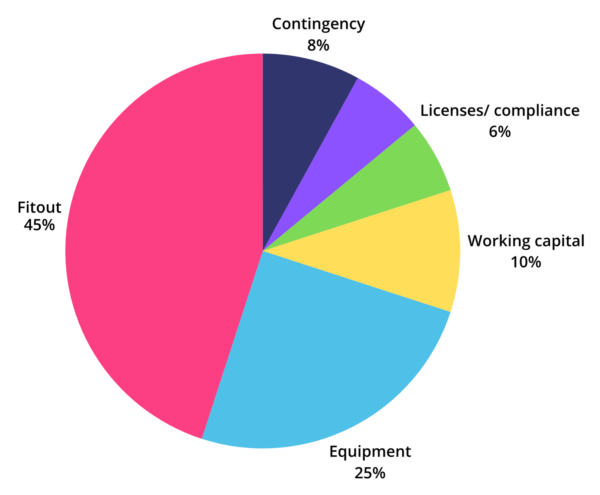
1. Fitout (40% to 55% of total budget)
Counters, plumbing, electrical upgrades, flooring, ceiling, lighting, walls, signage, furniture, exhaust hood, grease trap. A modest fitout in a previously food-licensed space runs $40,000 to $100,000. A full build from a shell space (no prior food approvals, no commercial plumbing) starts at $120,000 and can climb past $250,000 fast. The “let’s just do it ourselves” trap costs more in council rework than hiring a shop-fitter who does cafes every week.
2. Equipment (15% to 25%)
Espresso machine, grinders, water filtration, coffee bar ancillaries, fridges, dishwasher, kitchen gear, POS hardware. For a coffee-focused cafe, equipment lands $30,000 to $80,000 depending on whether you go new, refurbished, or a mix. This is the bucket where finance saves you the most cash.
3. Working capital (10% to 20%)
The hardest line for first-timers to size correctly. You need cash to cover rent, wages, beans, milk, food cost, utilities, and incidentals from the day you open until the day the cafe starts generating positive cash flow. Industry rule of thumb: budget three months of operating expenses in reserve. For a small cafe, that’s $35,000 to $70,000 sitting in the bank doing nothing on opening day. This is the bucket first-time owners cut first and regret most.
4. Licences and compliance (3% to 6%)
Council food business registration, food handler certifications, public liability insurance, business insurance, professional services to set up the entity, ABN registration, lease legal review. $5,000 to $15,000 depending on how much you do yourself and how complex the lease is.
5. Marketing and launch (3% to 6%)
Signage, branding, menu printing, opening campaign, photographer for opening week, social media setup, packaging design, uniforms. $5,000 to $25,000 depending on ambition. The first $5k is essential. The next $20k is optional and usually deferable.
6. Contingency (5% to 10%)
The line item no first-time owner budgets and every second-time owner does. A council inspection that requires an extra grease trap. A delivery that doesn’t fit through the rear door. A plumber who finds asbestos. Things go wrong. Budget for it.
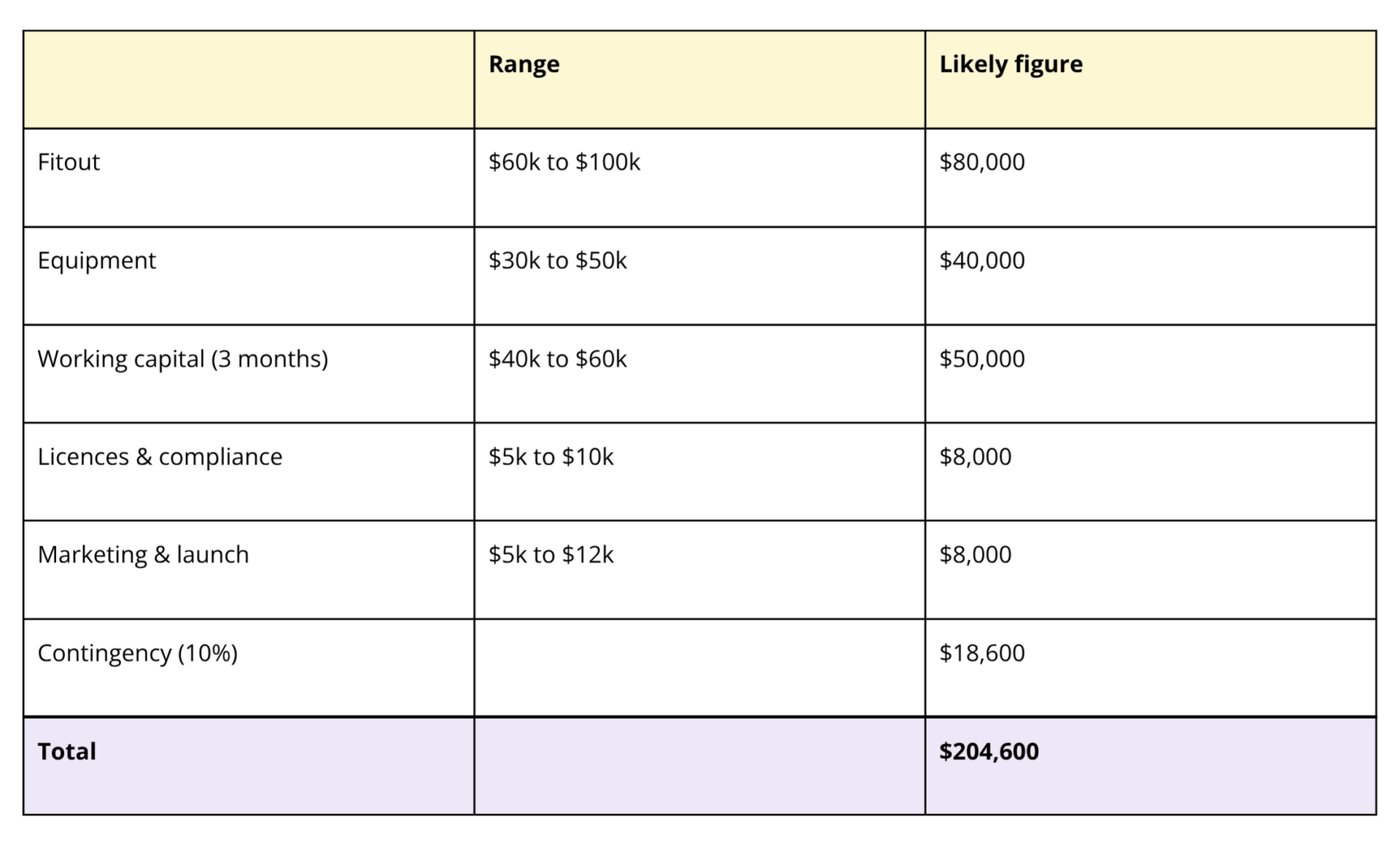
That’s roughly $200k all-in for a sensible, lean cafe in a reasonable space. Add another $50k to $100k if you’re in a shell space or going premium on the fitout.
The most common mistake first-time owners make: they spend $180,000 of their $200,000 budget on fitout and equipment, open with $20,000 in the bank, and run out of working capital in month two. They’ve built a beautiful cafe with no fuel left to operate it.
Working capital is the budget item, the one everything else depends on. Without it, none of the rest matters.
The cleanest way to protect working capital is to push equipment off the upfront ledger. A $40,000 equipment package on weekly rental is roughly $250 per week instead of $40,000 on day one. That’s $40,000 that stays in the working capital account, paying rent and wages while you find your regulars.
Over 36 months, you’ll have paid more total for the equipment than if you’d bought it outright. But you’ll still be open. Owners who run out of cash in month four don’t get to argue about which financing structure was cheaper over 36 months.
Most well-located, well-run cafes hit operational breakeven somewhere between month two and month six. Hit positive cash flow (covering owner drawings) typically takes six to 12 months. Return on invested capital, if it comes, usually shows up in year two or three.
That timeline only works if the cafe is still open in month six. Most first-time cafes that close, close in months three to nine. Almost always for cash-flow reasons that traced back to the original budget being too tight on working capital.
A few numbers most cafe operators we work with eventually settle on:
Buddy runs a rental (operating lease) product with weekly payments. That structure works for cafe and roaster operators because it aligns payment cadence to takings, removes the upfront cash hurdle on a new build, and keeps the upgrade option open through the term.
The model isn’t right for everyone. An owner-operator with cash and a 10-year plan for the same machine is usually better off on a chattel mortgage or buying outright. A multi-site operator running expensive long-life equipment may find a finance lease structure suits better. The rental model wins when cash flow flexibility and end-of-term optionality are worth more to you than balance sheet ownership.
Build your budget before you sign the lease. Most leases lock you into rent and outgoings for 3 to 5 years, and the worst thing you can do is sign a lease that only works if the budget is perfect. Sense-check the equipment line by getting a pre-approval through Buddy. The pre-approval gives you an actual weekly number to put in the budget, instead of a guess.
Apply and Jimmy will walk through the equipment list and give you an indicative weekly rental figure to slot into the budget.